
Cleveland Museum of Art Deploys LED Video Walls for Renaissance Exhibition
December 19, 2025 by guest author, John Berkovich
The Cleveland Museum of Art has installed two LED video walls to support visitor engagement and conservation storytelling, using Planar displays mounted with Peerless-AV hardware and integrated by Zenith Systems.
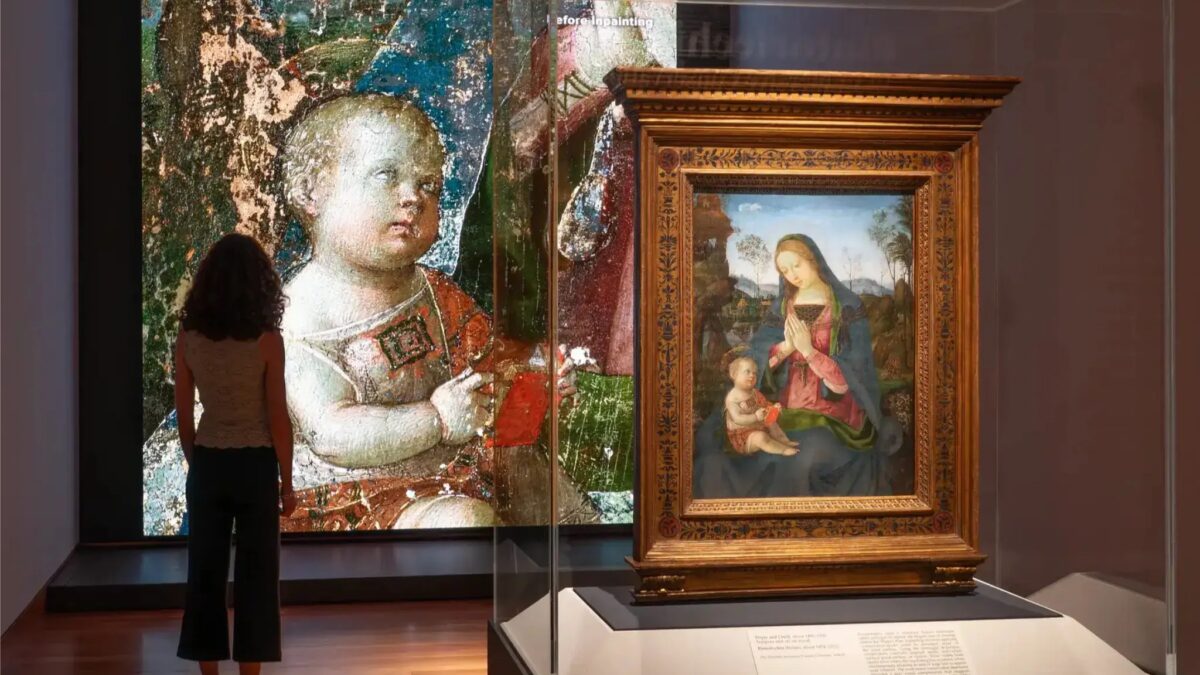
The most prominent installation is in the museum’s temporary Pintoricchio exhibition, which centers on Virgin and Child, a 15th–16th-century Renaissance painting. A 10-foot-by-10-foot (3.1 by 3.1 meters) LED video wall displays magnified views of the artwork’s restoration details, allowing visitors to explore the painting’s delicate layers as they move through the gallery. The experience is driven by ceiling-mounted cameras that track visitor proximity, triggering changes in the on-screen imagery without using touchscreens.
A second LED video wall is installed in the Horace Kelley Art Foundation Lobby, where it serves as a digital signage platform for wayfinding, schedules, and exhibition information. The lobby accounts for roughly 80 percent of total museum foot traffic, making visibility and reliability key considerations. The lobby installation was completed in March 2025, with the exhibition video wall following later in the year.

-
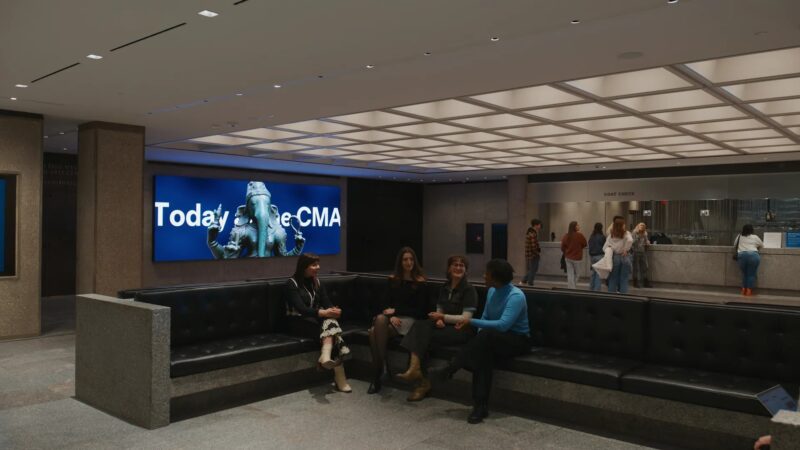
- The video wall in the Horace Kelley Art Foundation Lobby supports wayfinding and exhibition information
Both displays use Peerless-AV’s Seamless Connect Universal LED Mounting System, selected by Zenith Systems to address uneven wall surfaces and the visual requirements of a museum environment. The mounting system allowed precise alignment without extensive wall preparation and supports future relocation of the exhibition display.
The lobby video wall measures 20 feet wide by 6.7 feet high (6.10 by 2.04 meters) and uses Planar DLPro 1.5mm LED displays at a resolution of 3840 by 1296. The exhibition installation features Planar DLPro 1.8mm dvLED displays at 1600 by 1620 resolution, mounted within a recessed structure designed to blend into the gallery space.
Installation of both video walls was completed within two weeks, coordinated alongside gallery construction to meet exhibition deadlines. Museum officials say the digital displays have become a natural extension of the visitor experience, offering deeper insight into conservation work while keeping the artwork itself as the focal point.
(Images: Cleveland Museum of Art/Dan King)
Leave a comment